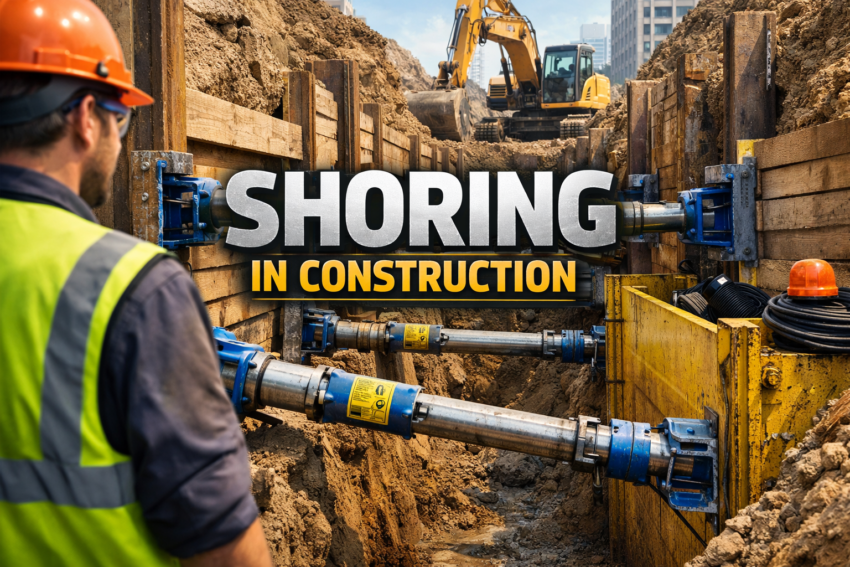
Shoring in construction is the temporary support of structures or excavations to prevent collapse; it’s governed in the U.S. by OSHA excavation standards and must be designed/installed by competent persons or engineers. Use the right system for soil type, depth, and adjacent loads, and follow OSHA’s competent‑person, testing, and protective‑system rules.
Key considerations before shoring
- Depth and geometry of excavation.
- Soil classification (Type A, B, C, or stable rock).
- Surcharges and adjacent structures that add lateral loads.
- Access, egress, and emergency planning.
What is Shoring? Overview
Shoring is a temporary support system—timber, steel, aluminum, or hydraulic—used to hold walls, trenches, or building elements until permanent systems are in place. It differs from underpinning, which is permanent. A competent person must evaluate hazards and select protection methods; OSHA requires protective systems for trenches 5 ft deep or more unless in stable rock.
| Type | Typical Use | Materials | Advantages | Limitations |
|---|---|---|---|---|
| Hydraulic Shores | Vertical/angled support in trenches and structures | Steel hydraulic jacks; timber or steel wales | Fast install; adjustable | Requires inspection; equipment failure risk |
| Timber Shoring | Small excavations, building repairs | Timber posts, wales, struts | Low cost; adaptable | Labor intensive; variable strength |
| Soldier Pile and Lagging | Deep excavations near structures | Steel H-piles; timber or precast lagging | Good for deep cuts; reusable | Requires heavy equipment; engineered design |
| Sheet Piling | Waterfront, soft soils, deep excavations | Interlocking steel sheets | Rapid installation; good for water control | Vibration; expensive extraction |
| Trench Box (Shield) | Worker protection inside trenches | Steel or aluminum box | Quick placement; protects workers from cave-in | Does not prevent soil movement outside box |
Essential Safety Practices for Shoring
- Competent person on site: must classify soil, inspect daily, and stop work if conditions change.
- Follow OSHA protective options: sloping/benching, shoring/bracing, or shielding (trench boxes) based on soil and depth.
- Design and engineering: engineered shoring for deep or surcharge‑affected excavations; use stamped drawings when required.
- Access and egress: ladders or ramps within 25 ft lateral travel for trenches ≥4 ft.
- Control surcharges: keep spoil piles and heavy equipment at least 2 ft from trench edges.
- Inspection and maintenance: inspect after rain, vibration, or any event that could change conditions.
Risks and Mitigation
Cave‑ins, struck‑by, and equipment failure are primary hazards. Mitigate by engineering design, daily competent‑person inspections, atmospheric testing in confined excavations, and strict exclusion zones for heavy equipment. Use written rescue and emergency plans.
Bottom line
Shoring saves lives when selected and installed per soil, depth, and adjacent loads and when overseen by a competent person or engineer. Prioritize engineered designs for deep or complex sites, document inspections, and follow OSHA excavation standards to remain compliant and safe.
Read also-
How to prepare BOQ for Small Construction Projects?