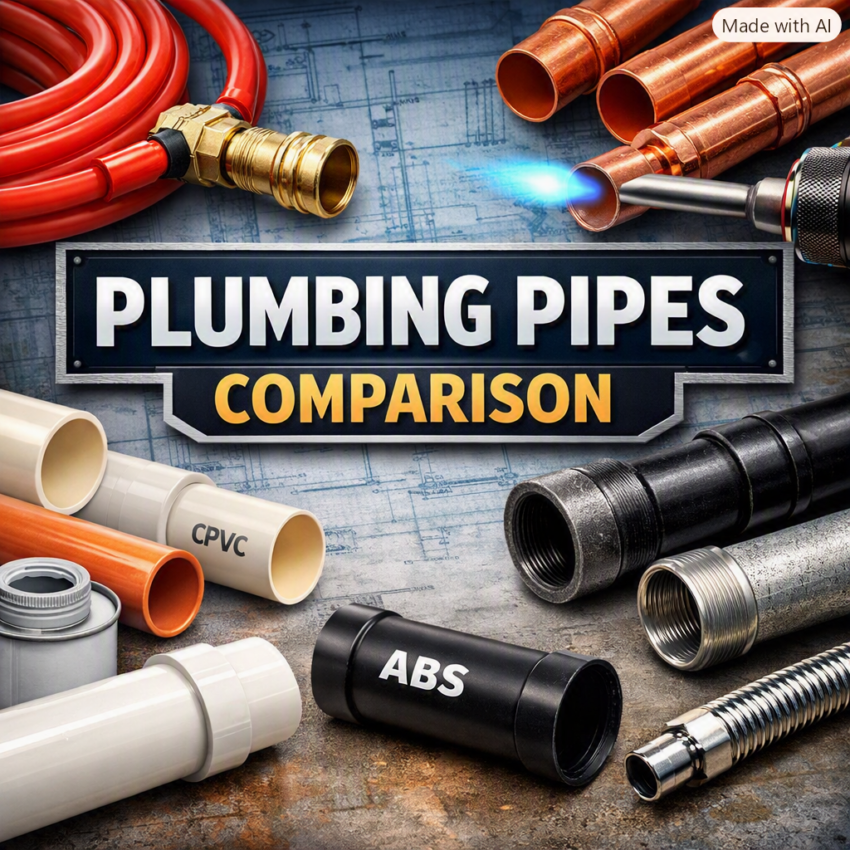
Different Types of Pipes in Plumbing
Plumbing in U.S. homes and buildings uses several common pipe materials, each with distinct strengths, weaknesses, and typical applications. Below is a concise comparison table followed by practical guidance for homeowners, DIYers, and property managers.
| Material | Common Uses | Pros | Cons | Typical Lifespan |
|---|---|---|---|---|
| PEX (cross‑linked polyethylene) | Water supply lines; repiping; radiant‑heat loops | Flexible; easy to install; resists freeze damage; low cost | Not UV‑stable; fittings must be compatible; some codes restrict exterior use | 25–50 years |
| Copper | Hot and cold water supply; exposed runs; some repipes | Durable; heat resistant; antimicrobial; recyclable | Higher material/labor cost; can corrode in acidic water; theft risk | 50+ years |
| PVC (polyvinyl chloride) | Cold water supply; drain, waste, vent (DWV) | Inexpensive; lightweight; corrosion‑resistant | Not for hot water; brittle in freezing temps; solvent‑weld fittings only | 25–40 years |
| CPVC (chlorinated PVC) | Hot and cold potable water | Handles higher temps than PVC; similar installation | More expensive than PVC; can become brittle | 25–50 years |
| Galvanized steel | Older water supply lines; some outdoor uses | Strong; was standard historically | Prone to corrosion and scale; low flow over time | 20–50 years |
| Cast iron | Main sewer lines; DWV in older homes | Durable; sound‑dampening | Heavy; expensive to repair; external corrosion | 50–100+ years |
| ABS (acrylonitrile butadiene styrene) | DWV (drain, waste, vent) | Tough; good for cold DWV; easy to install | Not accepted by all codes; can warp with heat | 25–50 years |
| Stainless steel | Specialty supply lines; corrosive environments | Corrosion‑resistant; long lasting | High cost; uncommon in residential plumbing | 50+ years |
Read Also – 2022 California Plumbing Code
How construction pipes are typically used in U.S. plumbing
- Supply lines (hot and cold): Modern homes commonly use PEX or copper. CPVC is also used for hot water in many regions. Older homes often still have galvanized steel supply lines that may need replacement due to corrosion and reduced flow.
- Drain, waste, and vent (DWV): PVC, ABS, and cast iron are the usual choices. PVC and ABS are common in newer construction for their light weight and ease of installation; cast iron remains common for main sewer lines and in older buildings for its durability and noise reduction.
- Outdoor and specialty uses: Galvanized was once standard for outdoor spigots and supply lines; today, PEX or copper are preferred. Stainless steel is used where corrosion resistance is critical.
Read Also – Essential Plumbing Tools – Handy Guide
Pros and cons — what matters when choosing a pipe
- Cost and labor: PEX is usually the most cost‑effective for repiping because it’s flexible and fast to install; copper has higher material and labor costs.
- Durability and longevity: Copper and cast iron have long track records for longevity; PEX performs well but is newer (warranties and long‑term data vary).
- Corrosion and water quality: Galvanized steel corrodes internally and can discolor water; copper can corrode in very acidic water; plastic pipes don’t rust but may have other concerns (e.g., leaching, UV sensitivity). Water chemistry and local code influence the best choice.
- Temperature and pressure: CPVC and copper handle hot water well; standard PVC should not be used for hot potable water. PEX tolerates hot water but check manufacturer temperature/pressure ratings.
Code, safety, and regional considerations for installing plumbing pipes(U.S. focus)
- Local plumbing codes matter. Municipalities adopt versions of the International Plumbing Code (IPC) or Uniform Plumbing Code (UPC) and may have local amendments that restrict or prefer certain materials for plumbing pipes(for example, ABS vs. PVC or specific PEX types). Always check local code before installing or replacing pipes.
- Potable water approvals. Use materials and fittings certified for potable water (NSF/ANSI standards) for supply lines.
- Inspections and permits. Major repipes typically require permits and inspections. DIYers should confirm when a licensed plumber is required.
Practical advice for homeowners and DIYers
- Identify the job: For repiping a whole house, PEX is often the fastest and most economical; for exposed runs or where longevity and resale value matter, copper remains popular.
- Check water chemistry: If your water is acidic or high in minerals, consult a plumber about corrosion‑resistant options or water treatment before choosing copper or galvanized.
- Match pipe to application: Use PVC/ABS/cast iron for drains and vents; do not use standard PVC for hot water. Use CPVC or PEX for hot potable water where allowed.
- Use approved fittings and installation methods: Solvent welds, crimp rings, push‑fit fittings, and soldered joints each have best practices; follow manufacturer instructions and local code.
- Plan for future access: If you choose PEX, consider accessibility for manifolds and shutoffs; if copper, plan for expansion and support to avoid stress.
When to call a professional
- Whole‑house repipe or replacing galvanized supply lines.
- Sewer/main line repairs (cast iron or clay to modern materials).
- Complex code or permit issues or when you’re unsure about local requirements. A licensed plumber can evaluate water chemistry, code constraints, and the best material for longevity and cost.
Final takeaway
There’s no single “best” plumbing pipe for every situation. PEX offers flexibility and cost savings for modern repipes; copper provides proven longevity and heat resistance; PVC/CPVC/ABS and cast iron each serve specific DWV and sewer roles. Choose based on the application, local code, water chemistry, and budget—and when in doubt, consult a licensed plumber.
Read Also-
Top 5 Best Construction Scheduling Software
Top 10 Concrete Admixture Making Companies in USA (2026 Updated)
FAQs
There are three types. The first one is PEX-A: Most flexible, expands easily. The second one is PEX-B: Slightly stiffer, highly durable, and very common. The third one is PEX-C: Least flexible and budget-friendly