Your building’s foundation carry the entire weight of your home — every wall, floor, and roof load ultimately transfers into the soil through it. When a foundation moves, cracks, or settles unevenly, the damage ripples through the whole structure: doors stop closing, drywall cracks, floors slope, and in severe cases, the building becomes unsafe. Building foundation repair is at early stage is far better than ignorance where retrofitting of whole structure will be needed.
The good thing about foundation failure? We can fix most of the foundation damage problem, and catching them early can mean the difference between a $500 crack repair and a $15,000 underpinning project. This complete guide covers everything U.S. homeowners and building owners need to know about foundation repair — warning signs, root causes, repair methods, current 2026 costs, and prevention strategies.
Top Causes of Foundation Damage
Expansive Clay Soils
The single biggest culprit in states like Texas, Oklahoma, Colorado, and parts of the Southeast. Clay-rich soils swell when wet and shrink when dry, cycling seasonal pressure on foundations. This “shrink-swell” behavior causes differential settlement — where one part of the foundation moves more than another.
Poor Drainage and Water Management
Water is the enemy of every foundation. Clogged gutters, short downspouts, negative grading (ground sloping toward the house), and plumbing leaks saturate the soil, weakening its bearing capacity and creating hydrostatic pressure against basement walls.
Improper Soil Compaction
Homes built on poorly compacted fill soil settle as the loose material consolidates under the structure’s weight — often appearing 3–10 years after construction.
Tree Roots and Vegetation
Large trees within 15–20 feet of a foundation can extract enormous amounts of moisture from the soil, causing localized shrinkage and settlement on that side of the house.
Freeze-Thaw Cycles
In northern climates, frost heave lifts foundations that aren’t founded below the frost line, and repeated freeze-thaw cycles widen existing cracks.
Earthquakes and Sinkholes
Seismic activity (California, Pacific Northwest) and karst/sinkhole terrain (Florida, Kentucky, Tennessee) create sudden, severe foundation damage requiring specialized repair.
Foundation Repair Methods Explained
Epoxy and Polyurethane Crack Injection
Best for: Non-structural cracks, water leaks
Cost: $250–$800 per crack
Epoxy injection structurally bonds concrete cracks back together, while polyurethane foam injection flexes with movement and seals out water. This is the most affordable professional repair and works well for cracks under 1/4 inch that show no signs of ongoing movement.
Underpinning with Push Piers (Steel Piers)
Best for: Settling or sinking foundations
Cost: $1,500–$3,500 per pier installed (2026)
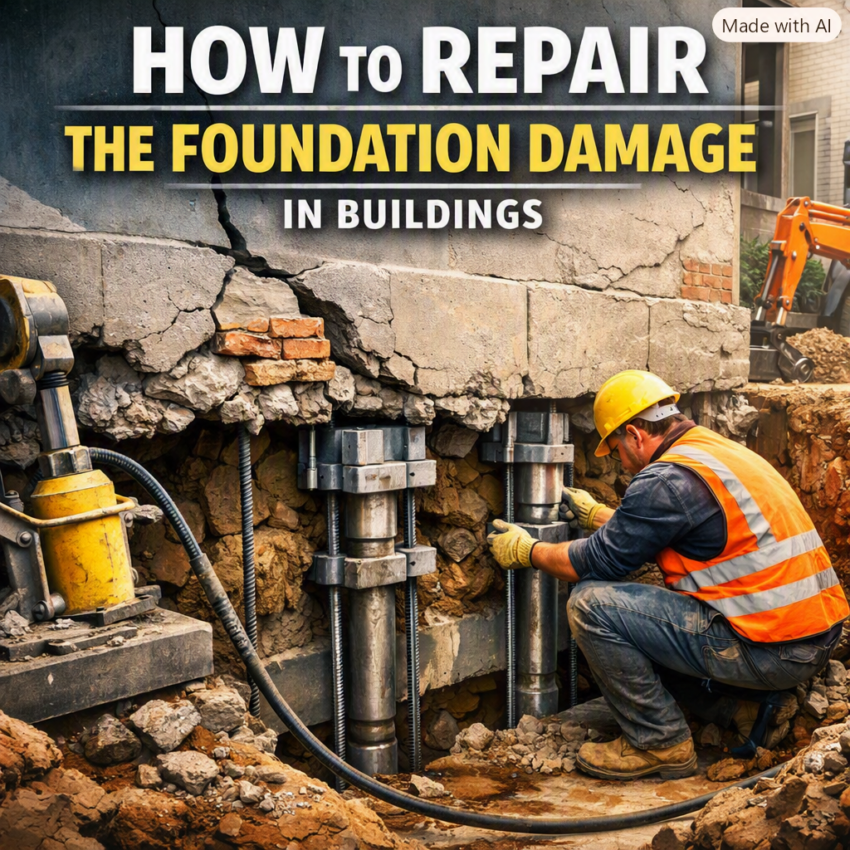
Hydraulically driven steel piers are pushed through unstable soil until they reach load-bearing strata or bedrock. The home’s weight is then transferred onto the piers, and the foundation can often be lifted back toward its original elevation. Most homes need **3–8 piers**, putting typical projects at **$5,000–$15,000**, with severe cases reaching $30,000+.
Helical Piers
Best for: Lighter structures, additions, porches, new construction stabilization
Cost: $2,000–$4,000 per pier
Screw-like steel shafts are mechanically rotated into the soil to a specified torque (which correlates to load capacity). Helical piers work in areas where push piers can’t generate enough reaction force and are installable with minimal vibration.
Concrete Pressed Pilings
Best for: Expansive clay regions (very common in Texas)
Cost: $300–$1,000 per piling
Segmented concrete cylinders are pressed into the ground to refusal. They’re economical and widely used in the South, though steel piers typically reach greater depths.
Slabjacking / Mudjacking / Polyjacking
Best for: Sunken concrete slabs, uneven slab foundations
Cost: $500–$1,900
A cement slurry (mudjacking) or expanding polyurethane foam (polyjacking) is pumped beneath a sunken slab to lift it back to level. Polyurethane foam is lighter, cures in minutes, and won’t add load to weak soils — but neither method fixes the underlying soil problem, so it’s a corrective rather than permanent structural solution in active soils.
Wall Anchors and Braces (for Bowing Basement Walls)
Best for: Basement walls bowing inward from soil pressure
Cost: $400–$1,000+ per anchor; full walls $4,000–$15,000+
Steel plate anchors embedded in stable soil outside the wall connect through rods to interior wall plates, gradually straightening the wall. Where exterior access is limited, carbon fiber straps or steel I-beam braces stabilize the wall from inside.
Foundation Waterproofing and Drainage Correction
Best for: Water intrusion, hydrostatic pressure problems
Cost: $2,400–$7,000 for sealing; interior drain + sump systems vary
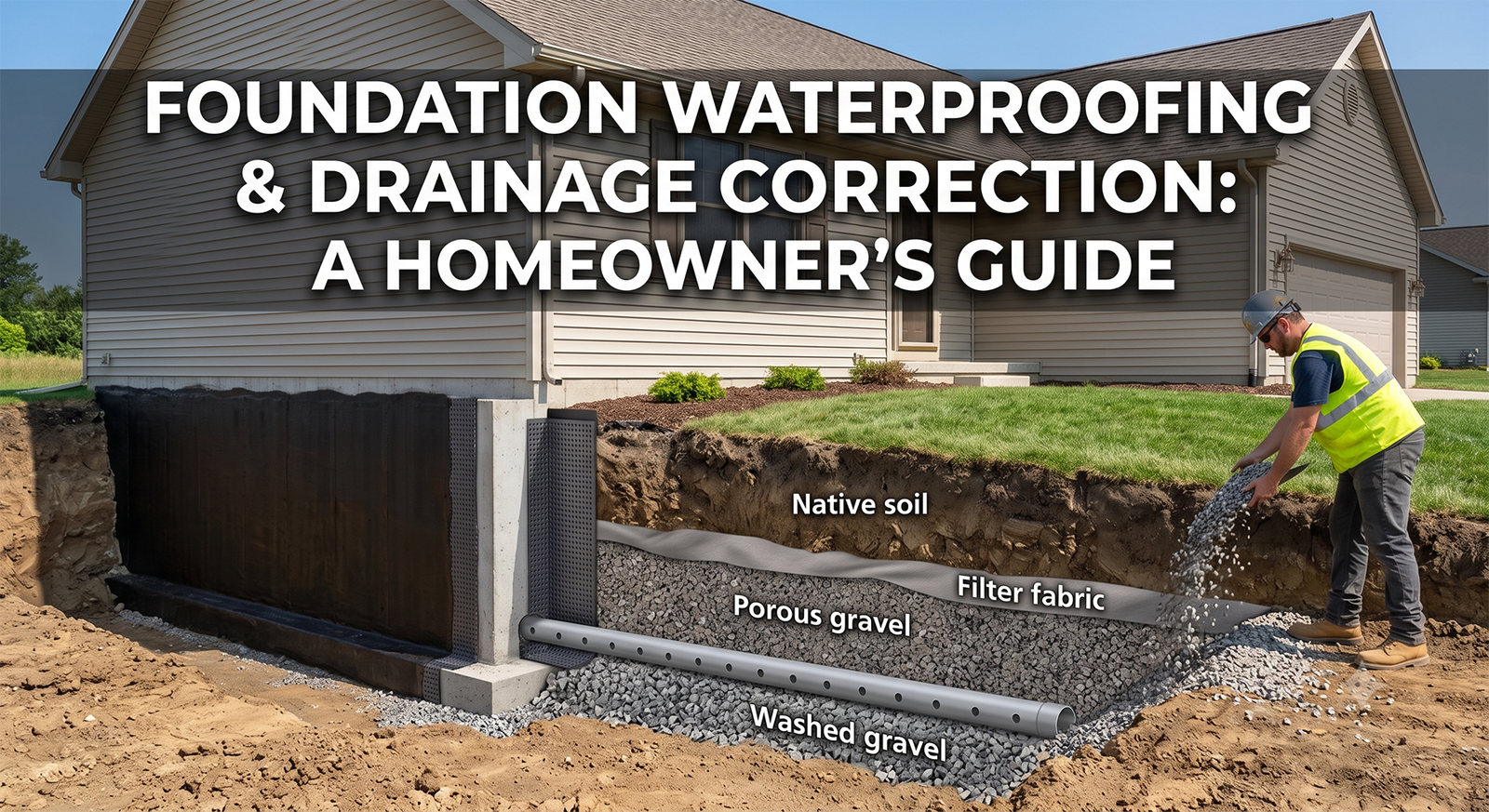
Includes exterior membrane damp-proofing, French drains, interior perimeter drains, sump pumps, regrading, and gutter/downspout extensions. Drainage correction is often required *alongside* structural repair — fixing the piers without fixing the water problem invites repeat failure.
Full Foundation Replacement
Best for: Worst-case scenarios
Cost: $20,000–$100,000+
The house is lifted on hydraulic jacks and cribbing while the old foundation is demolished and rebuilt. Rare, but necessary when a foundation has failed beyond economical repair.
Warning Signs of Foundation Problems
Catch these early and you’ll likely stay in the low-cost repair tier:
Exterior signs:
– Stair-step cracks in brick or block masonry
– Horizontal cracks in foundation walls (serious — indicates soil pressure)
– Cracks wider than 1/4 inch, or cracks that keep growing
– Chimney leaning or separating from the house
– Gaps between garage door and pavement
Interior signs:
– Doors and windows sticking or refusing to latch
– Diagonal cracks radiating from door/window corners
– Sloping, sagging, or bouncy floors
– Gaps between walls and ceilings or between baseboards and floors
– Nail pops in drywall
– Standing water or dampness in the basement or crawl space
**Rule of thumb:** Hairline vertical cracks are usually shrinkage-related and cosmetic. **Horizontal cracks, stair-step cracks, and cracks wider than 1/4 inch demand professional evaluation.**
Read Also-
Georgia Construction Contractor License Complete Guide
How BIM Is Transforming the Future of Civil Engineering?
Essential Plumbing Tools – Handy Guide
Types of Plumbing Traps – An Essential Guide
FAQs
Crack injection takes a few hours. Pier installation typically takes 1–3 days for an average home. Full foundation replacement can take several weeks.